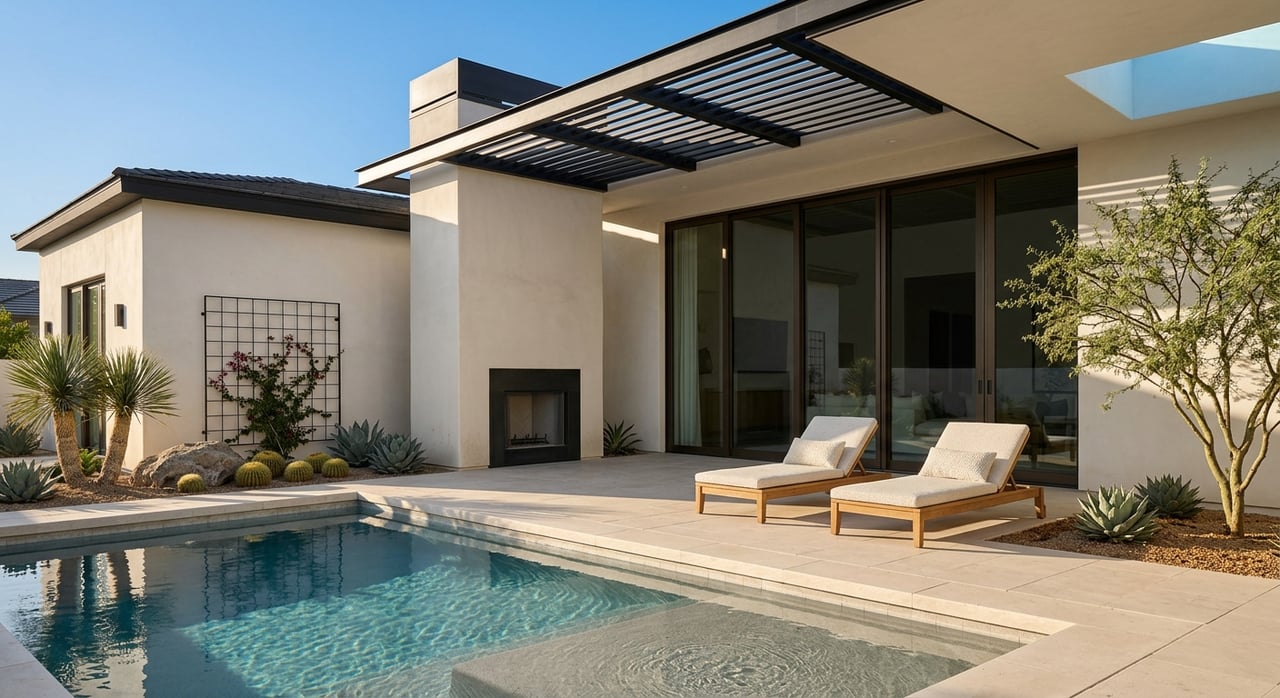
Paradise Valley vs Scottsdale Homes for Luxury Buyers
June 18, 2026
June 18, 2026
If you’re choosing between Paradise Valley and Scottsdale for your next luxury home, you’re really deciding what kind of everyday experience you want. Both markets offer high-end homes, mountain views, and strong name recognition, but they live very differently once you get past the listing photos. This guide will help you compare privacy, lot size, lifestyle, design character, and price so you can move forward with more clarity. Let’s dive in.
Paradise Valley and Scottsdale sit next to each other, but they offer very different scales. Paradise Valley covers 15.4 square miles with a 2025 estimated population of 12,774, while Scottsdale spans 184.5 square miles with 243,050 residents. That difference shapes everything from housing patterns to daily convenience.
In simple terms, Paradise Valley feels smaller, quieter, and more preservation-focused. Scottsdale gives you a broader mix of neighborhoods, home styles, dining, retail, and day-to-day options. Neither is better for everyone. The right fit depends on how you want to live.
If privacy is high on your list, Paradise Valley often stands out. The town is predominantly zoned for single-family housing, and its land use pattern centers on one home per lot. That creates a very different feel from a larger city with more varied housing types.
Most of Paradise Valley is zoned R-43, which requires a minimum one-acre lot size. Some areas allow 35,000, 18,000, or 10,000 square-foot lots, and the general plan also references five-acre estate lots in parts of town. For many luxury buyers, that lot pattern is a major draw because it supports space, separation, and a custom-estate feel.
The town’s planning documents also emphasize preserving low-density residential qualities, scenic corridors, mountain views, and dark skies. Hillside regulations are designed to limit visual impact, which matters if you value a more protected visual environment. If you want a home that feels tucked away and less affected by future large-scale change, Paradise Valley may align more closely with that goal.
Scottsdale offers a wider range of living environments. Some areas are low-density and desert-oriented, while others place you closer to restaurants, galleries, retail, and resort activity. That range gives you more flexibility if your luxury-home search includes different lifestyle priorities.
In places like the Dynamite Foothills, planning documents describe a rural desert character with existing densities generally around two- to three-acre lots. In the Cactus Corridor, low-density lots have historically ranged from 35,000 square feet to 2.5 acres, supporting semi-custom homes on medium-sized lots. These pockets can appeal to buyers who want space without limiting themselves to one type of setting.
At the same time, Scottsdale plans for both single-family and multifamily housing. Its housing approach, along with rules that allow vacation and short-term rentals by right in residential districts subject to HOA limits and city rules, points to more use flexibility over time. If you want more options now and later, Scottsdale usually gives you a bigger menu.
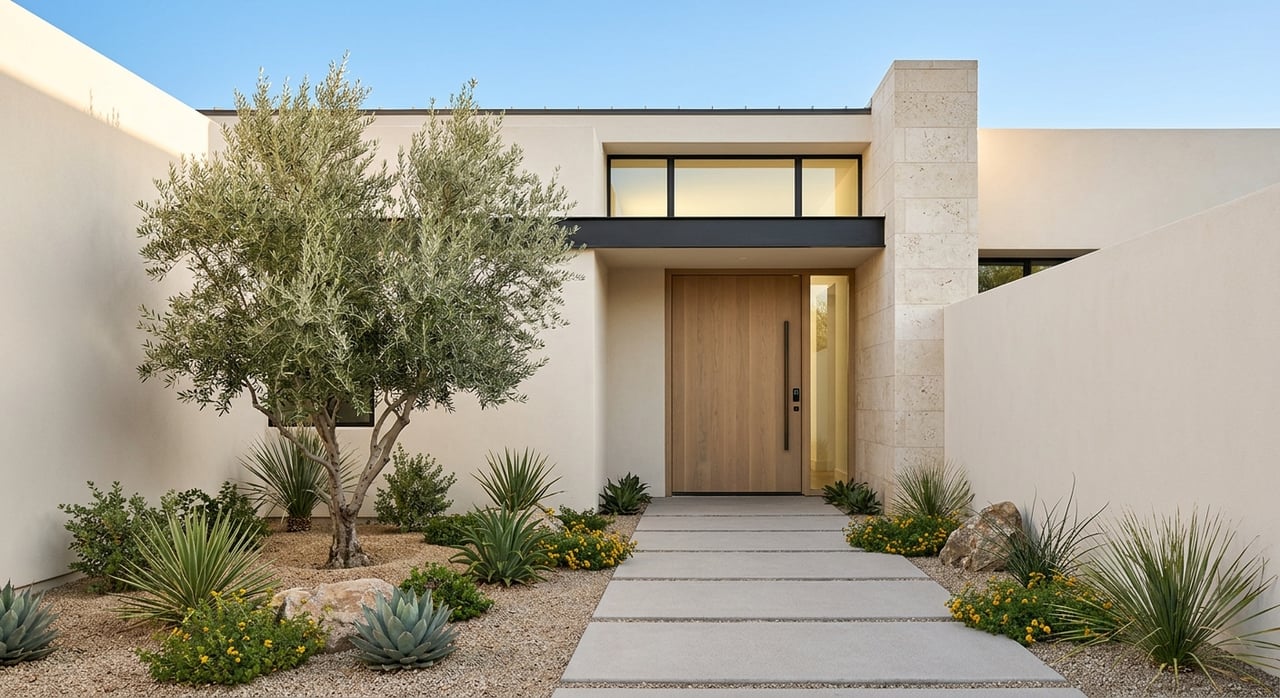
Paradise Valley tends to read as a custom estate market. The town’s general plan notes that it embraces many architectural styles, but its larger planning priority is protecting low-density residential character, mountain views, and scenic corridors. In practice, the setting often puts the site itself front and center.
That means buyers are often weighing architecture together with hillside placement, view preservation, and how a home sits on the land. If you’re drawn to homes where scale, privacy, and lot presence matter as much as interior finishes, Paradise Valley often delivers that experience.
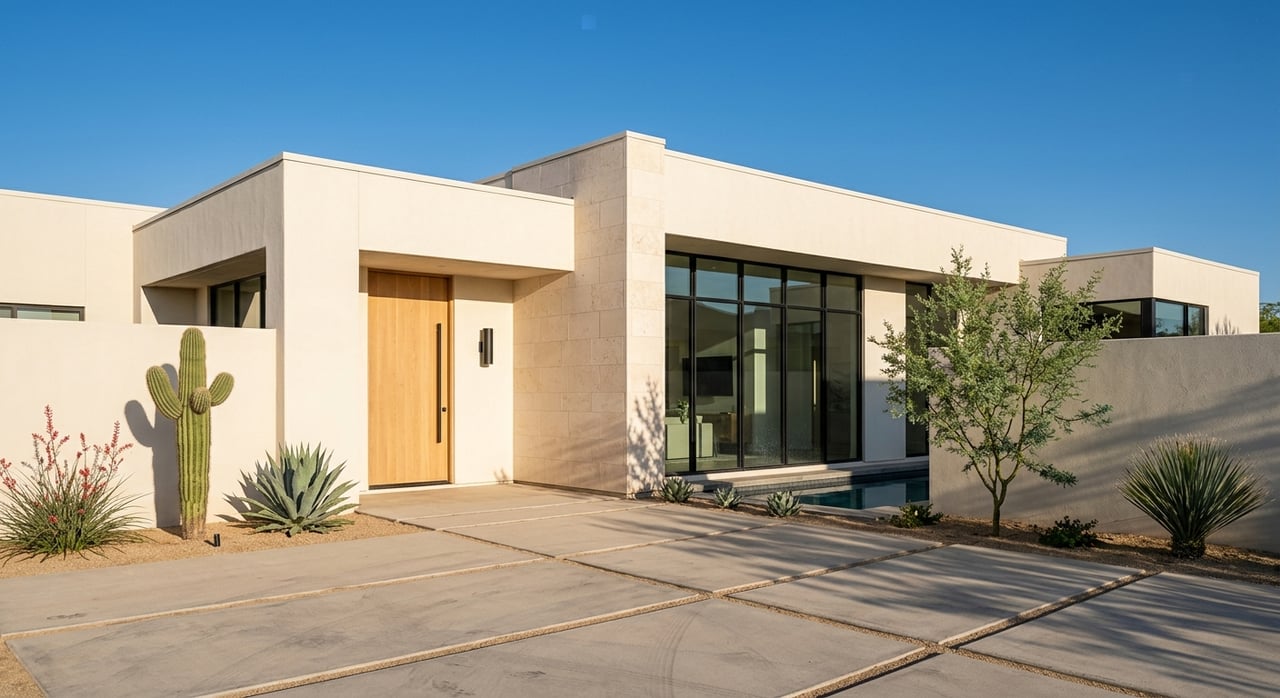
Scottsdale has a broader and more district-specific design language. City design guidance references styles that may include Mission, Santa Fe, Territorial, Spanish, and contemporary derivations. Certain areas also carry their own identity, including a documented Contemporary tradition in Scottsdale’s Town and Country preservation guidance.
For you as a buyer, that usually means more stylistic variety from one neighborhood to the next. If your search includes desert modern, transitional, Spanish-inspired, or other distinct architectural expressions, Scottsdale may offer more room to match your personal taste.
Luxury buyers often start with square footage and finishes, but day-to-day lifestyle tends to shape long-term satisfaction. This is where the difference between Paradise Valley and Scottsdale becomes especially clear.
Paradise Valley is closely tied to a resort-centered luxury experience. The town lists nine resorts in or associated with Paradise Valley, including Camelback Inn, Hermosa Inn, Mountain Shadows, Omni Montelucia, Sanctuary Camelback Mountain, Scottsdale Plaza Resort, and SmokeTree Resort. The town also highlights resort dining and nearby fine dining options such as Lon’s, elements, El Chorro, Hearth ’61, and Rusty’s.
That creates a polished, tucked-away lifestyle where hospitality and relaxation play a large role. If you picture your luxury home near resorts, spa settings, mountain backdrops, and a quieter rhythm, Paradise Valley can feel especially compelling.
Scottsdale offers a more expansive everyday amenity base. The city says Old Town alone has more than 90 restaurants, 320 retail shops, and more than 80 art galleries. Scottsdale also points to the McDowell Sonoran Preserve as the largest urban wilderness area in the United States, giving you meaningful access to open-space recreation and hiking.
If you want luxury living with more built-in activity, dining, shopping, and arts access, Scottsdale has a stronger case. It can be the better fit if you enjoy having more to do without planning your whole day around a resort setting.
For many buyers, the biggest practical difference is price. Current market data in the research shows Paradise Valley at a dramatically higher price point than Scottsdale on a citywide basis.
Redfin’s May 2026 data puts the median sale price at $4,446,839 in Paradise Valley and $954,429 in Scottsdale. Zillow’s home value index shows $3,503,410 in Paradise Valley and $858,307 in Scottsdale. Depending on the metric, Paradise Valley is roughly four to five times Scottsdale by price.
That price gap matters beyond budget alone. It affects what you can buy, how much land you can secure, what level of customization is realistic, and how your home may fit into your broader financial picture. If you want the Paradise Valley lifestyle, it often requires a much larger capital commitment.
Luxury buyers should also think about how each market behaves over time. According to Redfin’s May 2026 data, homes in Paradise Valley took about 91 days to sell, compared with 63 days in Scottsdale. A slower-moving market is not automatically a negative, but it can reflect a more specialized buyer pool and a different pricing environment.
Paradise Valley’s long-term profile is closely tied to preservation. The town is focused on protecting quiet neighborhoods, and the research notes that it regulates short-term rentals with that goal in mind. If you value stability, lower density, and a more controlled residential feel, that may support your long-range plans.
Scottsdale offers more flexibility in how residential property may fit your future needs. Because the city allows vacation and short-term rentals by right in residential districts, subject to HOA limits and city rules, some buyers may view Scottsdale as the more adaptable choice. That can matter if you are balancing lifestyle goals with future use options.
Choosing the right market becomes easier when you match the city to your priorities.
If your goal is maximum privacy, larger estate lots, and a more preservation-minded setting, Paradise Valley usually stands apart. It is a market built around space, quiet, and a highly residential luxury experience.
If your goal is luxury with more variety, more daily convenience, and more flexibility, Scottsdale often gives you more paths to the right fit. It is larger, more layered, and more diverse in both housing and lifestyle.
The key is not asking which market is more prestigious. The better question is which market matches the way you want to live, spend, and hold real estate over time. That is where a smart luxury purchase starts.
If you’re weighing Paradise Valley against Scottsdale and want a more tailored view of where your budget, lifestyle, and long-term goals line up best, Rami Haddad can help you compare the options with clear, local guidance.
Stay up to date on the latest real estate trends.
From pricing and marketing to negotiation and closing, Rami delivers a customized plan designed to maximize results and minimize stress.