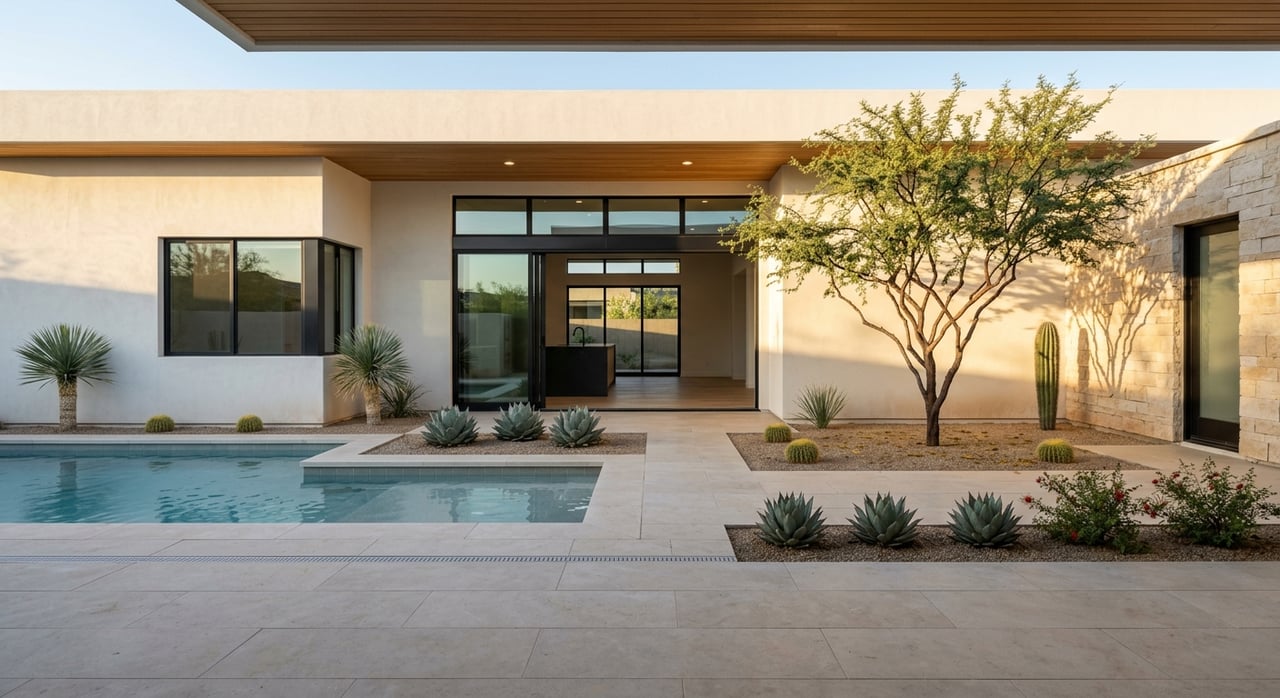
How to Evaluate Scottsdale New Construction Homes
April 16, 2026
April 16, 2026
If you are considering new construction in Scottsdale, it is easy to get pulled in by a polished model home or a sleek finish package. But in this market, the smartest decision usually comes down to factors you cannot swap out later, like the lot, the orientation, the builder’s track record, and the true total cost. If you want to evaluate a new build with more clarity and less guesswork, this guide will help you focus on what actually matters. Let’s dive in.
Not all new construction opportunities work the same way. In Scottsdale, it helps to first identify whether you are looking at a production home, a semi-custom opportunity, or a true custom build.
According to the National Association of Home Builders, production builders typically build from a set of preselected plans on land they own, while custom builders usually build on land owned by the customer and create a home from scratch. That difference affects how much control you have over the lot, layout, finishes, and timeline.
It also affects resale. A highly customized home may fit your lifestyle beautifully, but a production or semi-custom property in the right location may appeal to a broader future buyer pool. If you are weighing multiple opportunities, this is one of the first filters to apply.
A beautiful home is only part of the story. You also want confidence in the builder, the paper trail, and the protections that follow the property.
Arizona gives buyers an important layer of protection. In Zambrano v. M & RC II LLC, the Arizona Supreme Court held that buyers cannot waive, and builders cannot disclaim, the implied warranty of workmanship and habitability. In simple terms, a builder’s written warranty is not the only protection you should rely on.
Before you move forward, it is smart to verify the builder’s license and complaint history through the Arizona Registrar of Contractors. You can also review permit history, site plans, property records, and flood-hazard information through Scottsdale’s records system.
Scottsdale also outlines how projects move through plan review and phased inspections. That matters because the inspection trail can tell you a lot about how organized and compliant a project has been from start to finish.
In Scottsdale, the lot is not just where the home sits. It is a major part of the asset.
The city’s design guidance says development should respect the Sonoran Desert climate, topography, vegetation, and historical context. It also encourages preservation of natural features, view corridors, and shade-conscious design elements like overhangs, recessed windows, and desert-adapted landscaping through its Sensitive Design Program.
That makes practical lot analysis especially important. A great floor plan on a weak lot can still become a compromised purchase, while a simpler home on a strong lot may hold value better over time.
When you evaluate a lot, pay close attention to:
If the property is in a more sensitive desert or hillside area, you may also want to review Scottsdale’s Foothills Overlay rules. These regulations can affect design, preservation requirements, and what may happen on nearby parcels.
Scottsdale’s climate should shape how you judge a new build. The city reports 314 average sunny days and 7.66 inches of annual rainfall, and it notes that triple-digit temperatures are expected almost every day from May through about September on its preserve and climate pages.
That does not mean every west-facing lot is a problem. It does mean you should think carefully about how the home handles heat during a large part of the year.
Look beyond the sales brochure and ask practical questions. Does the patio have meaningful shade? Is the outdoor space usable in late afternoon? How much west-facing glass is exposed? Are there roof overhangs or other design features that help manage solar gain?
In Scottsdale, outdoor living is a major part of the lifestyle story and the resale story. A backyard that looks good in a rendering but feels hard to use in summer may not deliver the value you expect.
One of the most common mistakes in new construction is paying premium pricing for features that are already required or close to standard. Scottsdale has fairly robust standards for new residential construction, and that changes how you should think about upgrades.
According to the city’s green building and code guidance, new residential construction is subject to 2021 IECC requirements, including items like improved ceiling insulation, cool roof surfaces, high-efficacy lighting, EV-capable charging infrastructure, and solar-ready rooftops. The city also highlights water-saving fixtures, efficient hot water distribution, site shading, native plants, and low water-use landscaping.
That means your job is to distinguish between what is already built into the baseline and what actually adds comfort, durability, or future resale appeal. In many Scottsdale communities, the best upgrades are not always the flashiest ones.
High-value areas to review often include:
These features may not stand out the way designer tile or a statement light fixture does. But they often matter more in day-to-day ownership, especially in a desert climate.
Water is not just an environmental topic in Scottsdale. It is also part of the ownership cost equation.
The city says it is planning for a future with less water and monitoring the potential for further Colorado River reductions. Scottsdale also states that about 90% of its drinking water comes from the Central Arizona Project and the Salt River Project, and it highlights major investment in recycled water through its water resources planning.
For you as a buyer, this makes low-water landscaping, irrigation efficiency, and manageable exterior design more important than they might be in other markets. A large yard can sound appealing, but the smarter question is how easy and efficient that yard will be to maintain.
When you buy new construction, you are not just buying the home as it exists today. You are also buying into the surrounding area’s next chapter.
Scottsdale’s housing report says vacant land is declining, and future growth is increasingly moving toward higher-density and mixed-use development. In FY2023-2024, the city reported 1,706 units in review, 838 under construction, and 1,394 completed, with 75% of the units in review being multifamily, according to the city’s housing and community data and annual housing report.
That does not automatically make one area better than another. But it does mean you should look at what may be built nearby, how that could affect privacy and views, and whether proximity to future activity centers could support long-term demand.
The city’s General Plan can help you understand the broader direction of growth, transportation, open space, and land use. For analytical buyers, this is part of underwriting the purchase, not just background reading.
A new-construction purchase should be compared against resale options on a fully loaded basis. The base price alone rarely tells the full story.
As you compare properties, build out the full cost picture:
In Scottsdale, lot premiums can be a major value driver. A better lot may cost more upfront, but it may also create stronger long-term appeal than spending the same amount on cosmetic upgrades.
If you are buying in an active phase or near unfinished homes, nearby construction can affect your day-to-day experience more than you expect. Noise, dust, truck traffic, and shifting views can all matter during your first months of ownership.
Scottsdale’s inspection services page outlines allowed construction hours. From May 1 through Oct. 15, construction activity is permitted from 5 a.m. to 7 p.m. on weekdays and 7 a.m. to 7 p.m. on Saturdays. Winter and spring hours are shorter, and construction is not allowed on Sundays.
You should also confirm whether the property has received a final certificate of occupancy. Scottsdale notes that the certificate stays with the property permanently, which makes it an important milestone in the process.
Before you commit to a new build in Scottsdale, make sure you can answer these questions with confidence:
The best Scottsdale new-construction purchase is often not the one with the most dramatic model-home presentation. More often, it is the one with the strongest lot, the best orientation, a practical upgrade strategy, and a clean builder and permit story.
If you want a second set of eyes on a new construction opportunity in Scottsdale, Rami Haddad brings a financially informed, hands-on approach to evaluating lot quality, builder details, and long-term value so you can make a more confident decision.
Stay up to date on the latest real estate trends.


From pricing and marketing to negotiation and closing, Rami delivers a customized plan designed to maximize results and minimize stress.